Acacia vs Teak vs Eucalyptus: Which Outdoor Wood Lasts?
The short answer: acacia is the value choice, teak is the longest-lasting, and eucalyptus sits in between — close to teak in durability at roughly half the price.
How the three woods compare
| Acacia | Eucalyptus | Teak | |
|---|---|---|---|
| Density | Medium | High | High |
| Natural oils | Low–medium | Medium | Very high |
| Weather resistance | Good with oiling | Very good | Excellent |
| Maintenance | Oil once a year | Oil every 1–2 years | Oil every 1–2 years, or let it silver |
| Price band | $ | $$ | $$$ |
Why acacia turns gray
Acacia has less natural oil than teak, so UV and rain break down the surface lignin and the wood silver out. That is not rot — the structure is fine — but it changes the look. A light sanding and a coat of teak or tung oil brings the color back. If you like the silvered look, leave it alone.
Teak is not maintenance-free
Teak survives because its oil resists water and insects, not because it never needs attention. Left outdoors, it develops a gray patina within a season. Oiling keeps the honey color; skipping it keeps the wood healthy but changes the appearance.
When metal or wicker is the better answer
- Powder-coated aluminium — light, rust-resistant, and the best choice for a balcony you have to carry furniture onto.
- Resin wicker — comfortable, UV-stable, and does not splinter, but the frame underneath is what determines the lifespan.
- Steel — strong and cheap, but chips expose rust; touch up scratches every season.
Frequently asked questions
Can acacia stay outside all winter?
Yes in mild climates. In hard-freeze areas, bring it in or cover it — standing water in joints is what causes splitting.
Is teak worth the price?
If the piece will live outdoors year-round and you want it to last 15+ years, yes. For a covered porch used seasonally, acacia is the better value.
What oil should I use?
Teak oil or tung oil. Avoid linseed oil outdoors — it feeds mold.
Which wood for which climate
In the humid South, acacia and eucalyptus both hold up if they are oiled once a year; the bigger risk is mold in the joints, so look for furniture that drains rather than traps water. In the dry Southwest, wood checks and splits — teak handles the swing better, and so does oiled eucalyptus. In freeze-thaw climates, bring lighter pieces inside for winter or accept that the finish will age faster.
Cleaning and resealing routine
Once a season: rinse with mild soapy water, let it dry fully, then apply a thin coat of teak or tung oil with a cloth. Do not use a pressure washer — it drives water into the grain and lifts the finish. If the surface feels rough, sand lightly with 220 grit before oiling.
Frames and cushions: what to pair
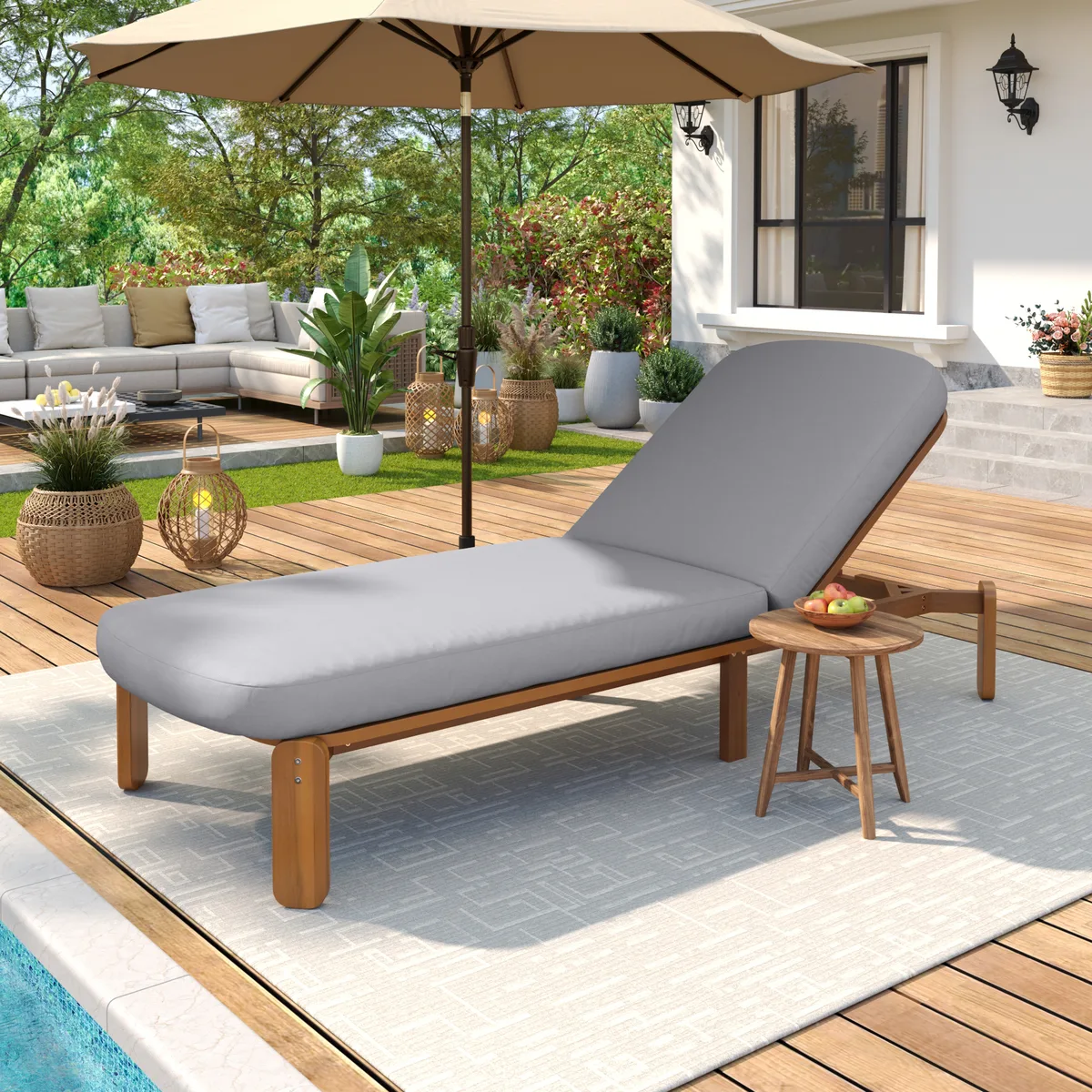
Wood frames pair best with thick, neutral cushions — the wood is the statement. Aluminium and resin wicker take color better, which is why most bright outdoor cushions are sold with those frames. Whatever you choose, bring cushions in when it rains; a soaked cushion is the most common reason outdoor furniture gets replaced early.
Ready to furnish the room? Every piece we carry ships from U.S. warehouses, with sizing notes on each product page.
Shop all furnitureMore buying guides