Sofa Depth Guide: How Much Floor Space Do You Actually Need?
The short answer: 34–36 inches of depth suits apartments and small living rooms, 38–40 inches is a standard family sofa, and 42 inches or more is a lounging sofa that needs a bigger room.
Depth vs seat depth
Two numbers get confused constantly. Overall depth is how far the sofa sticks out from the wall. Seat depth is from the front edge of the cushion to the back — the number that decides whether you sit upright or slouch.
A sofa can be 40 inches deep overall and still have a 22-inch seat depth, because the back cushions take up the rest. If you are tall, look for a seat depth of 24 inches or more; if you are short, 21–22 inches is more comfortable.
How much floor space you need
| Room size | Comfortable sofa depth | Notes |
|---|---|---|
| 10 × 12 ft | 34–36″ | Keep at least 30″ of walkway in front |
| 12 × 16 ft | 38–40″ | Standard three-seater works |
| Open plan | 40–44″ | Deep sofas need a rug to anchor them |
Walkway clearance
Leave 30 inches between the sofa and the coffee table for walking, and 36 inches if two people pass each other regularly. In a narrow room, a 34-inch sofa plus a 30-inch walkway needs 64 inches of floor — measure that before you fall in love with a deep sectional.
Getting it through the door
A 90-inch sofa will not fit through a 30-inch door frame while assembled. Check three things: the door width, the stairwell turn, and whether the legs come off. Most sofas ship with legs detached, which buys you 4–6 inches of clearance.
Frequently asked questions
Is a deeper sofa always more comfortable?
No. Deep sofas are harder to get out of and take up more floor. If the room is under 12 feet wide, 36 inches is usually the better choice.
What is a good seat height?
17–19 inches from floor to seat top suits most adults. Lower seats feel loungey but are harder for older knees.
Do sectionals need more depth?
Usually the same. The issue with sectionals is width and the corner footprint, not depth.
Sectionals and chaise depth
A sectional’s depth is measured on the straight sections. The chaise is deeper — often 60–70 inches from the back to the front edge — which is why a sectional that fits the wall can still block a doorway. Measure the chaise separately and check it against the walkway, not the room’s total width.
Corner pieces are the other trap: a 100-inch sectional is not two 50-inch sofas. The corner module adds 15–20 inches of depth in one direction, so the footprint is closer to an L than a rectangle.
Rug and coffee table spacing
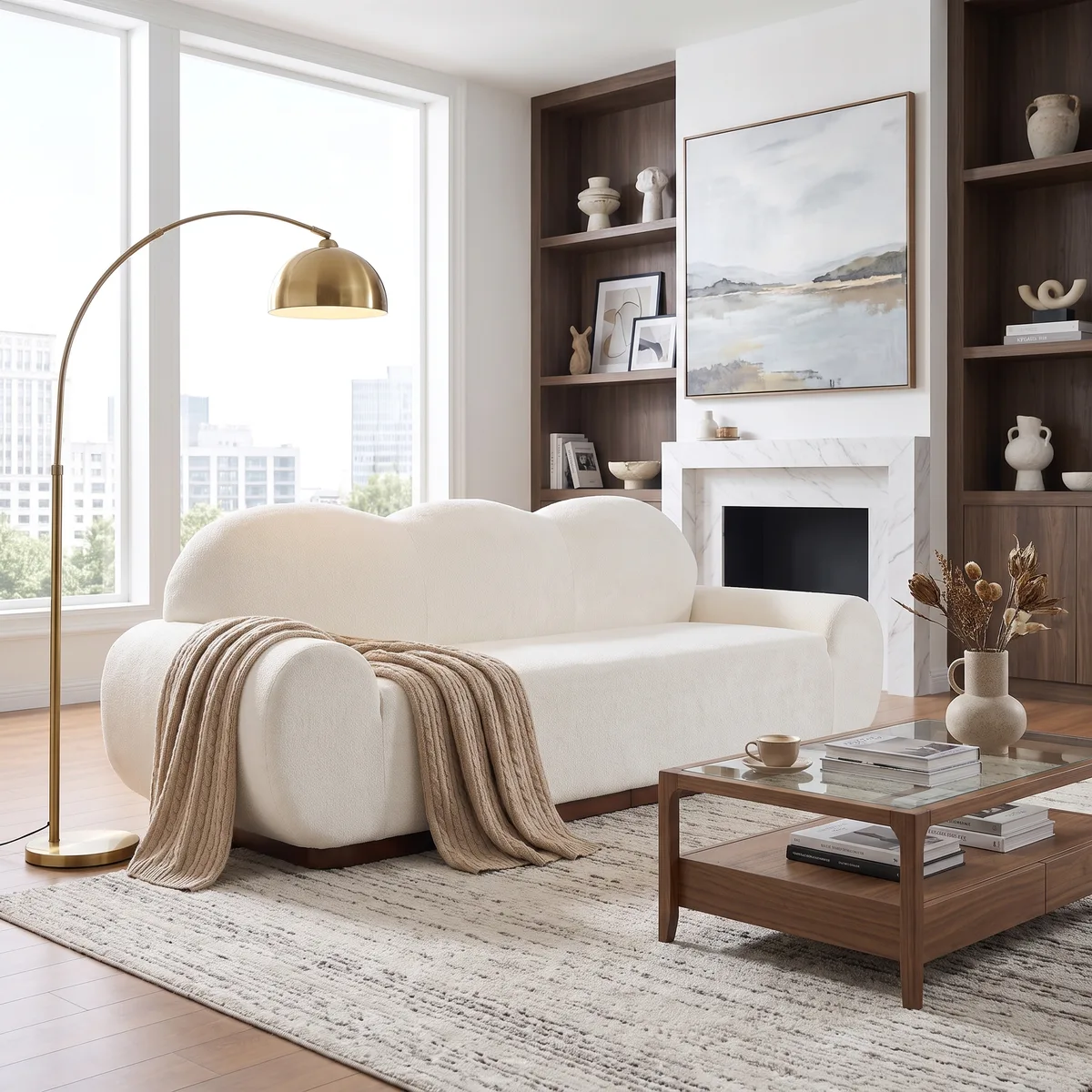
Leave 14–18 inches between the sofa’s front edge and the coffee table — enough to reach a drink, not enough to create a corridor. The rug should extend at least 6 inches under the sofa’s front legs, or the room reads as furniture floating on a hard floor. In a small room, a 5 × 8 rug under a 36-inch-deep sofa is usually the right proportion.
What depth does not tell you
Seat firmness and back height decide comfort more than depth does. A 40-inch sofa with a soft seat and a low back feels like a lounge; the same depth with a firm seat and a 20-inch back feels like a bench. If you cannot sit on it first, look for the seat height (17–19 inches), the seat depth (21–24), and the fill (foam density or pocket springs) in the spec table.
Ready to furnish the room? Every piece we carry ships from U.S. warehouses, with sizing notes on each product page.
Shop all furnitureMore buying guides